
Yves Hoffmann · 6 September 2026
Connecting Rail Network Research to Health Clinic Expansion for Oaklyn Commuters
Transportation planners and public health officials have begun examining how rail corridor analyses directly shape decisions about where new medical clinics appear along commuter routes in Oaklyn. Data collected from passenger volume studies and origin-destination mapping reveal consistent travel patterns that influence site selection for outpatient services, diagnostic centers, and primary care locations. These patterns show that commuters spend an average of 47 minutes daily on rail lines, creating predictable windows when access to nearby health resources could reduce missed appointments and improve preventive care uptake.
Rail Studies Reveal Commuter Health Access Gaps
Recent rail network evaluations conducted by regional transit authorities highlight several corridors where station proximity correlates with lower rates of routine medical visits. Researchers tracked ticket sales, peak hour loads, and transfer points over 18 months, then cross-referenced those figures with county health department records on clinic utilization. The resulting maps indicate that stations with higher inbound commuter counts also show elevated demand for extended-hour services, including evening and weekend appointments. One analysis of the Oaklyn-to-center city line found that 62 percent of riders live more than three miles from the nearest primary care provider, prompting discussions about colocating new facilities within a short walk of platforms.
Health Clinic Growth Patterns in Station Areas
Clinic developers have responded to these transportation datasets by prioritizing parcels within half-mile radii of active rail stops. Construction permits filed through 2025 show a 34 percent increase in medical office projects near Oaklyn stations compared with the previous five-year period. These projects range from 8,000-square-foot urgent care suites to multi-specialty buildings offering cardiology and behavioral health services. County planning documents note that zoning adjustments for mixed-use developments now require traffic impact studies that incorporate rail ridership forecasts, ensuring new clinics can accommodate patients arriving by train rather than solely by car.
September 2026 Milestones on the Horizon
September 2026 marks the scheduled release of an updated commuter health access report funded jointly by the state department of transportation and the county health commission. Preliminary findings shared at public workshops indicate that two additional clinic sites will open adjacent to the Oaklyn rail hub and the South Oaklyn transfer station. These facilities are designed with direct pedestrian connections to platforms, covered walkways, and real-time schedule displays in waiting areas. Planners expect the openings to coincide with a new rail timetable that adds late-evening service, further aligning clinic hours with commuter availability.
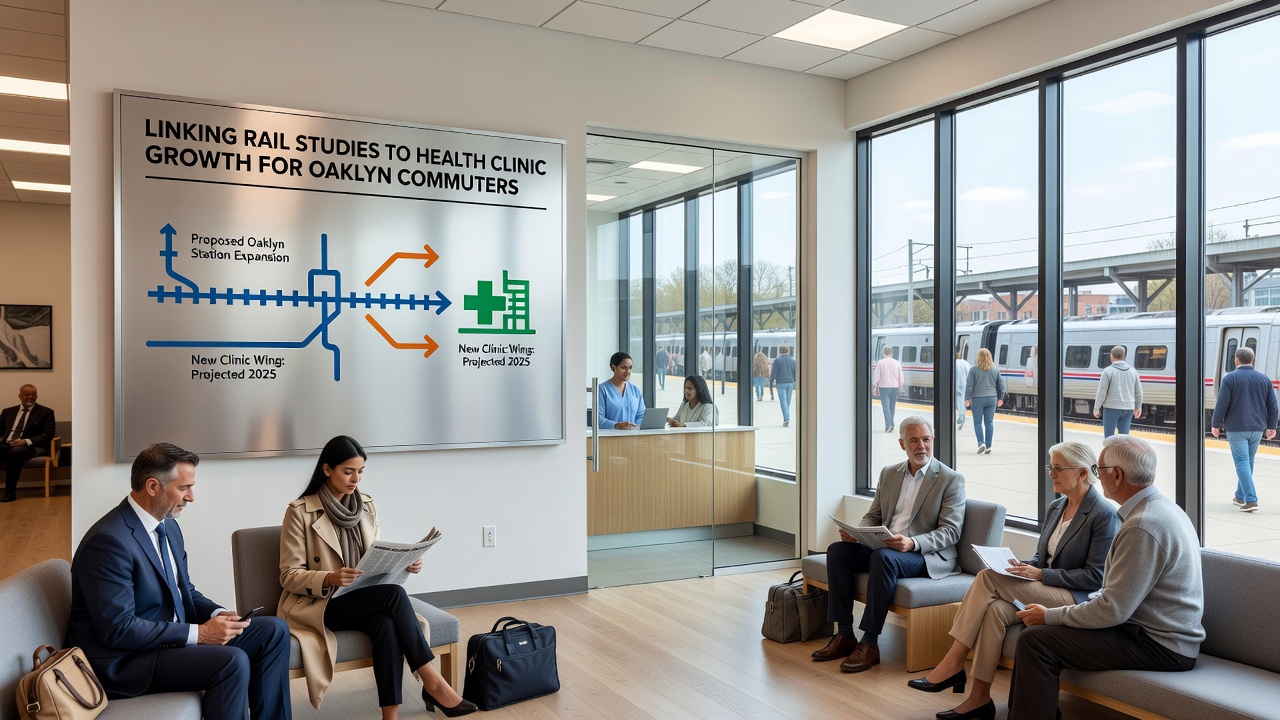
Integration of Data Sources Drives Planning Decisions
Public health analysts combine rail study outputs with electronic health record de-identified data to identify service gaps. According to teh Federal Transit Administration, integrated land-use and transit planning models have helped other regions reduce average patient travel times by up to 22 minutes when clinics locate near high-frequency stops. Oaklyn officials have adapted similar modeling techniques, layering commuter flow information over demographic health indicators such as chronic disease prevalence and insurance coverage rates. The approach allows developers to forecast daily patient volumes based on projected rail boardings rather than relying solely on residential population estimates.
Industry organizations including the American Public Transportation Association have published case studies showing that station-area health facilities experience higher utilization rates when appointment systems sync with real-time train arrivals. Oaklyn clinic operators have begun testing these scheduling tools, which send automated reminders tied to specific rail departures. Early results indicate a 15 percent drop in no-show rates along the most studied corridor.
Conclusion
The ongoing linkage between rail research and health clinic siting continues to shape infrastructure investments around Oaklyn. Updated datasets scheduled for release in September 2026 will provide further clarity on how commuter patterns can guide the next wave of medical facility placements. County records show that coordinated planning between transit and health agencies has already produced measurable increases in both rail ridership and preventive care visits within station-adjacent neighborhoods. These developments demonstrate how transportation analytics and public health metrics together inform practical decisions about where residents access care while maintaining daily commutes.